Scoping a Wiring Upgrade
If your Fort Hunt property has insufficient circuits for its current equipment, assess the installed wiring and loads before choosing an upgrade. Deciding how much of a home to rewire, rather than patching individual circuits, is a cost and safety tradeoff. We assess which circuits are overloaded, which runs use outdated wiring types, and whether a full rewire or targeted circuit additions will solve the problem more cost-effectively.
Partial fixes sometimes mask a larger capacity issue that resurfaces later as nuisance breaker trips or warm switches, so we explain what a partial repair will and won't fix before you commit to it.
- Circuit-by-circuit load assessment before recommending scope
- Full rewire versus targeted circuit additions compared directly
- Written scope and pricing before work begins
Sizing Service for a Charger, With a Generator Handled Separately
An EV charger draws continuous power from your home's electrical service, so before installing one we calculate your existing panel's spare capacity against the charger's real-world amperage draw, alongside HVAC and other major loads already on the panel. A standby generator is different: it is a supply source that feeds the house during an outage through a transfer switch, not an added load on your utility service, so it does not compete with a charger for service capacity the way another appliance would.
Where panel space is tight, adding a subpanel creates room for more circuit breakers in a convenient location, but a subpanel does not increase your home's total service amperage — it is fed from, and limited by, the capacity already available at the main panel. If your main service is close to its limit, a service upgrade — not a subpanel — is the step that actually adds capacity.
- EV charger load calculated against existing panel capacity
- Generator treated correctly as a backup power source, not a service load
- Subpanels explained as added circuit space, not added service amperage
Fixtures, Inspections, and Troubleshooting
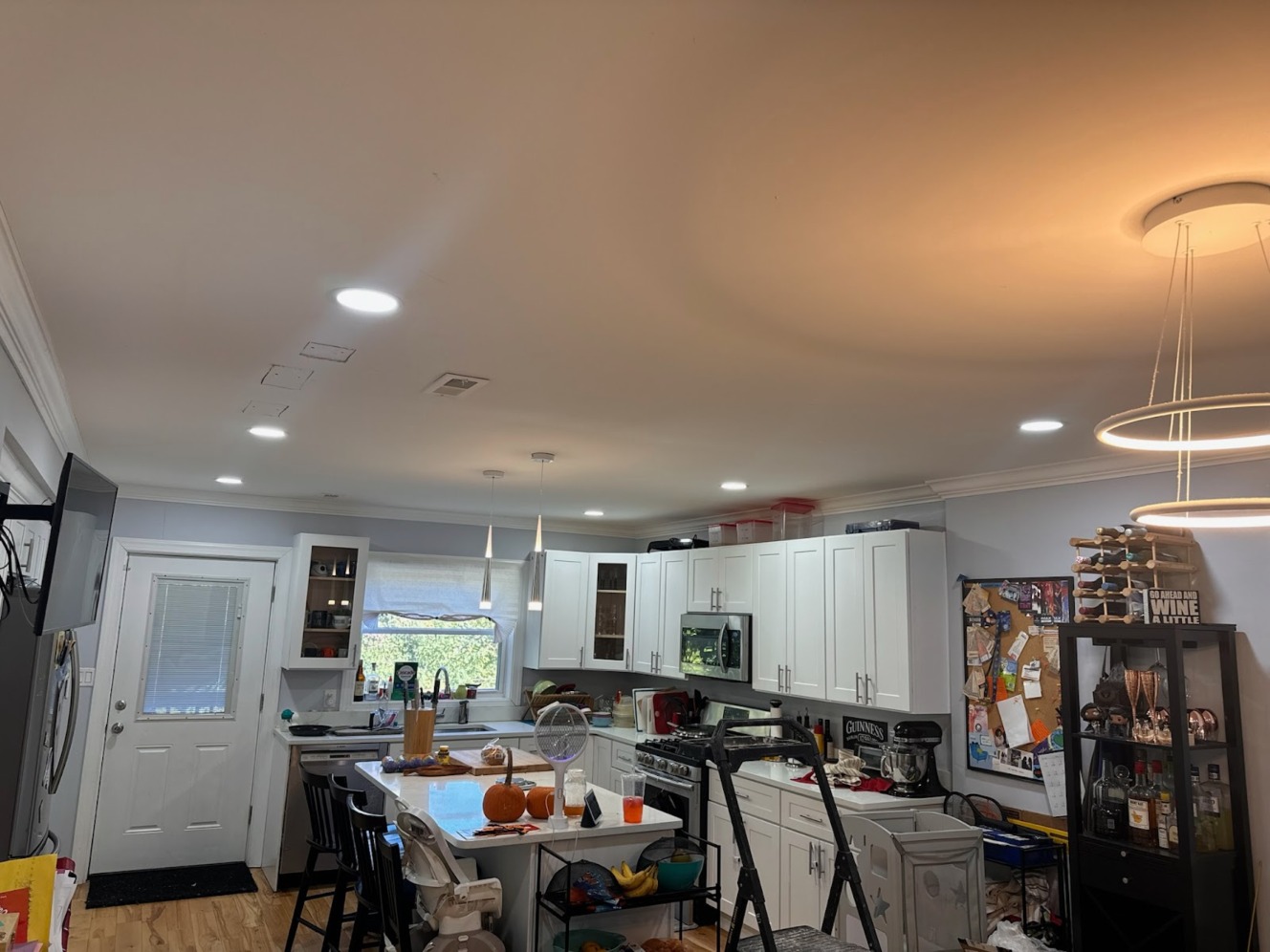
Fixture upgrades, from kitchen lighting to exterior fixtures, are a chance to correct undersized boxes or improperly supported wiring found during the work. Pre-purchase and code compliance inspections give Fort Hunt buyers and sellers a clear picture of panel labeling, grounding, and GFCI protection before a transaction closes.
When a circuit trips under specific conditions, we test under real load rather than guessing, so any repair is tied to the fault we actually found.
- Fixture installation paired with box and support corrections as needed
- Pre-sale and code compliance electrical inspections
- Methodical troubleshooting to avoid unnecessary part replacement
Frequently Asked Questions
How do you decide if a Fort Hunt home needs a full rewire?
We evaluate circuit loads, wiring age, and problem areas room by room, then recommend a full rewire only if targeted circuit additions won't solve the underlying capacity issue.
Does adding a standby generator use up panel capacity I need for an EV charger?
No. A standby generator supplies power to the house through a transfer switch rather than drawing from your service like an appliance does, so it is evaluated separately from charger or HVAC load calculations.
Will adding a subpanel increase my home's electrical service size?
No. A subpanel adds circuit breaker space fed from your existing service; it does not increase total amperage. If your main service is near capacity, a service upgrade is what adds real headroom.
Do electrical inspections help when selling a home in Fort Hunt?
Yes. A pre-sale inspection documents panel condition, grounding, and GFCI protection, which helps avoid surprises during a buyer's inspection.
What causes a breaker to trip only sometimes?
Intermittent trips are often tied to specific appliance combinations or loose connections. We test under real conditions to identify the actual trigger.