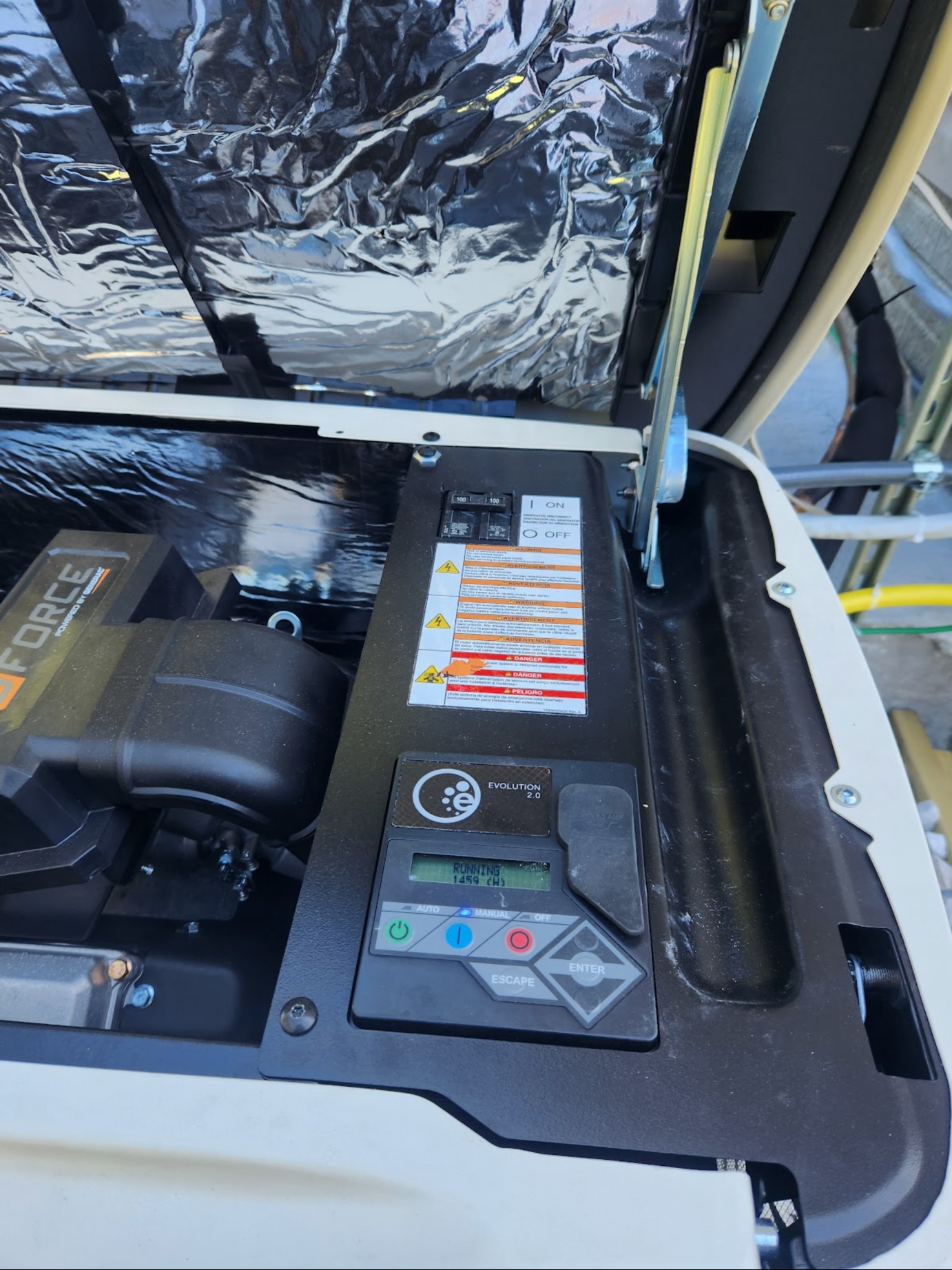
Backup Power for Businesses
We install standby power for:
- Restaurants and food service
- Medical and dental offices
- Data closets and server rooms
- Retail and grocery
- Multi-family and commercial buildings
- Any operation where downtime has a dollar cost
Complete Electrical Integration
We size the generator to your critical loads, install automatic transfer switches, and integrate the system with your existing distribution. Load-shedding can be used to prioritize the most important circuits.
Sizing starts with a load study: what must run, what should run, and what can wait. Refrigeration and life-safety systems come first, comfort loads come second, and the difference often changes the generator size you actually need. An oversized unit wastes fuel and money; an undersized one fails exactly when it matters.
Permitting, inspection, and startup testing are part of every installation.
Fuel, Placement, and Practicalities
Urban and suburban sites each have constraints — fuel delivery access, clearances from openings and property lines, sound expectations from neighbors, and where the transfer switch can live. We review the site before quoting so the design accounts for the building you actually have.
Gas and diesel each have trade-offs in runtime, maintenance, and fuel storage. We'll walk you through which makes sense for your operation rather than defaulting to whatever is on the truck.
Keep It Ready
A generator is only useful if it starts. Ask about ongoing maintenance and testing. Modern units self-test weekly, but exercising under real load and maintaining oil, batteries, and transfer switch gear is what turns a green light into actual backup power.
Call (202) 521-4835 to discuss standby power.
What Happens During an Outage
When utility power fails, the transfer switch senses the loss, disconnects your building from the grid, and signals the generator to start. Power returns within seconds to the circuits you’ve designated — and when the utility restores service, the sequence reverses automatically. No one has to be in the building for any of it to work.
The design decisions happen before the outage: which circuits are on the emergency panel, whether load shedding drops comfort loads to protect critical ones, and how the system behaves during a brownout or a rapid flicker sequence. We walk you through all of it at startup testing, so the first real outage is a demonstration, not an experiment.
Fuel planning deserves a mention too. Standby units run on natural gas, propane, or diesel, and each has trade-offs in the city: natural gas means no refueling but no service during a gas-main emergency, propane needs tank space and deliveries, and diesel needs fuel polishing if it sits for years. We walk through fuel options during the estimate so the system you buy matches the fuel you can actually keep.
Frequently Asked Questions
What size generator does my business need?
We perform a load study to determine which equipment must stay powered and size the generator accordingly.
Do you install automatic transfer switches?
Yes. Every standby installation includes a properly rated transfer switch.
Do you also install home generators?
Yes. See our home generators page for residential backup power.
How fast does a standby generator start?
Automatic systems typically restore power within seconds of an outage, with a brief transition while the transfer switch operates.
Can our generator be serviced even in winter?
Yes. Routine maintenance runs year round, and cold-weather starting is one of the things a load test verifies.