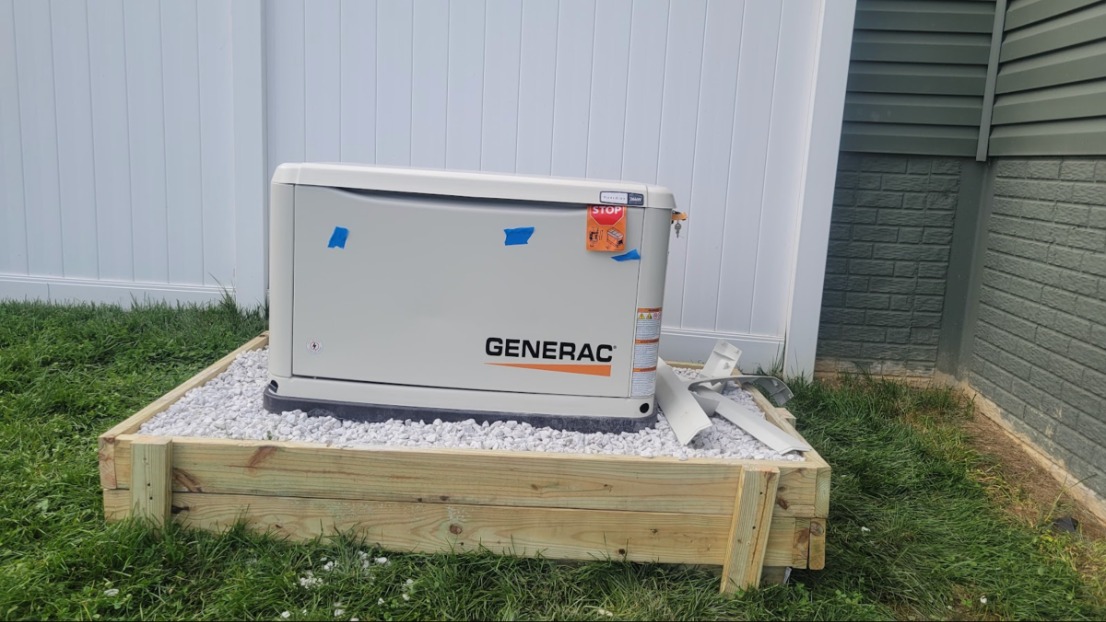
Backup Power Options
We install:
- Whole-home standby generators
- Essential-circuit systems
- Automatic transfer switches
- Portable generator inlets and interlocks
- Commercial standby generators
- Optional battery-pairing provisions where you want solar-ready backup
Sized to Your Home
We calculate your load, recommend a size, and handle electrical installation, permitting, and startup testing, coordinating with gas providers as needed.
Maryland's suburban lots usually make placement easier than in the District — setbacks and clearances are simpler to satisfy — but the sizing question is the same everywhere: what must run, and for how long? A sump pump and a refrigerator need far less than a whole-house system, and honest sizing saves real money.
Storm Season Readiness
The best time to install a generator is before the forecast says you need one. After a major storm, installers across the region are booked for weeks, and portable generators at big-box stores sell out fast.
If you already own a generator that hasn't been exercised lately, a maintenance visit now — before storm season — is cheap insurance against the surprise of a unit that won't start. We service generators regardless of who installed them.
Get Ready for the Next Storm
Call (202) 521-4835 to plan generator installation in Maryland. From the first load calculation to the first simulated outage, one licensed team handles the whole electrical side.
Whole-Home or Essential Circuits in Maryland
Maryland’s larger lots make both generator approaches practical, so the decision comes down to what an outage would actually cost you. A house with a well pump, a septic system, or electric heat has genuinely critical loads; a townhouse on public water and gas heat mostly needs refrigeration, internet, and a few lights.
Essential-circuit systems cover those basics at a lower price point and fuel use. Whole-home systems eliminate the conversation entirely — everything just works. Our load calculation puts real numbers on both options so the choice is a budget decision, not a guess.
Either way, the transfer switch, permitting, and startup testing are the same quality of work — because the difference between options is capacity, never safety.
Permitting is straightforward in most Maryland jurisdictions, but the sequence matters: the electrical permit comes first, the utility notification follows, and inspections close the project out. In some counties the gas plumber’s work needs its own inspection, and we coordinate that timing so nothing stalls the final sign-off. Homeowners don’t need to manage any of this — we handle the paperwork and tell you when someone will need to be home, We build that expectation into the schedule when we quote, so there are no surprises at the end. From first visit to final inspection, most Maryland generator projects wrap up comfortably inside a single month of scheduling.
Frequently Asked Questions
What size generator does a Maryland home need?
It depends on the loads you want to cover. We perform a load calculation on site.
Do you install generators for Maryland businesses?
Yes. We install commercial standby generators.
Do generators require permits in Maryland?
Yes. We obtain the required permits and schedule inspections.
How long can my house run on a generator?
Runtime depends on fuel supply and the loads running. We'll walk you through the math for your system during the estimate.
Can you service my existing generator?
Yes. We maintain, test, and repair standby generators regardless of who installed them.