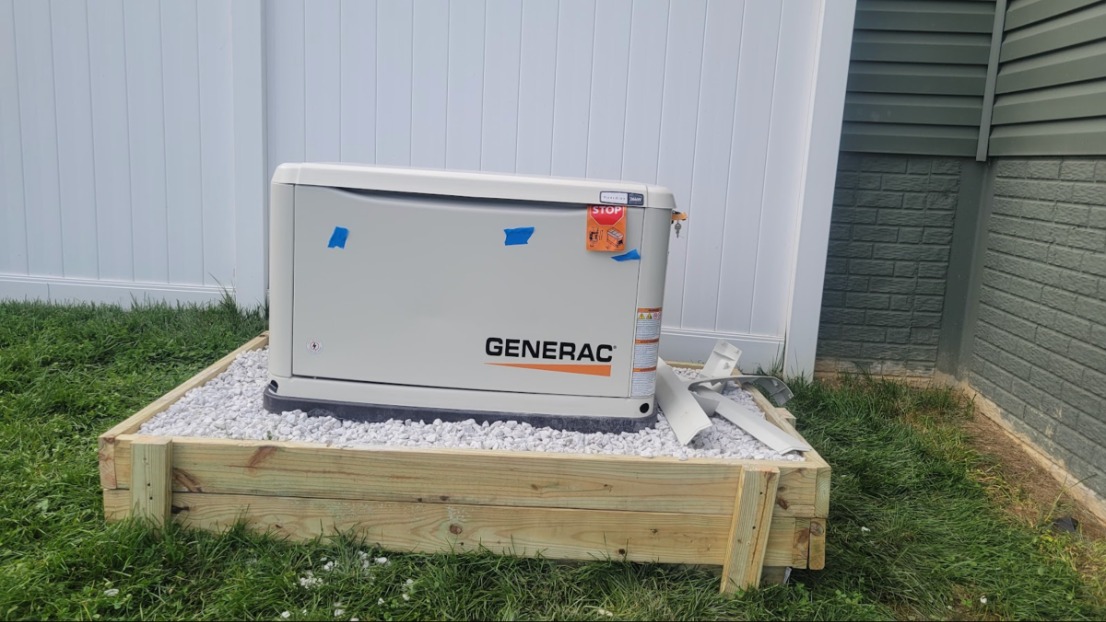
Whole-Home vs. Essential-Circuit Backup
A whole-home generator powers nearly everything in the house. An essential-circuit system covers the loads you can't go without — refrigerator, sump pump, furnace blower, medical equipment, internet, and a few lights. We calculate your actual load and help you choose the size that fits your needs and budget.
The right answer depends on your house, not on a brochure. A row house with gas heat and city water has very different backup needs from a well-water home on several acres. We walk through what must stay on, what's nice to have, and what the difference costs.
Our Installation Process
A safe generator installation is mostly electrical work, and that's our specialty. Here's what the project looks like from first call to first outage:
- On-site load calculation and placement review
- Automatic transfer switch installation
- Connection to your electrical panel
- Coordination of gas connection and pad placement
- Permits, inspection, and startup testing
- A walkthrough showing you how the system operates and what service it will need
Safety Comes First
A generator connected without a transfer switch can backfeed the utility lines and injure line workers. Every system we install uses a properly rated transfer switch so your home is isolated from the grid while the generator runs.
Placement matters as much as wiring. Generators need clearance from windows, doors, and vents, and they need service access on all sides. We review the site before recommending a location, so you don't end up with a unit that can't be legally permitted or safely serviced. Call (202) 521-4835 to plan your backup power.
Keeping Your Generator Ready
A standby generator spends most of its life waiting, which means the only way to know it works is to test it. Modern units exercise themselves weekly, but they still need periodic maintenance — oil, filters, battery checks, and a look at the transfer switch.
We set up every installation with a startup test under real load, and we can return for the routine service that keeps the system ready for the next storm. If you already own a generator that hasn't run in a while, a service visit is a small price compared to discovering a dead unit during an outage, and a short maintenance list is far easier to handle than a failed transfer switch on a stormy night.
Frequently Asked Questions
What size generator do I need?
It depends on which appliances you want to run. We perform a load calculation on site to recommend the right size.
What is an automatic transfer switch?
It senses a power outage, disconnects your home from the grid, and starts the generator automatically.
Do you install portable generator inlets?
Yes. We can install a code-compliant inlet and interlock so a portable generator can safely power selected circuits.
How long can a standby generator run?
A properly fueled whole-home generator can run for days, but runtime depends on the fuel source and the loads on the system. We go over this during sizing.
Where can a generator be placed?
Manufacturers and code set clearance requirements from openings and property lines. We review your site and propose compliant locations before any work begins.
Do you service generators you didn't install?
Yes. We can inspect, test, and service existing standby generators, including units that haven't run in a long time.