What Solar Maintenance Includes
A maintenance visit focuses on the electrical health of your system:
- Inverter inspection and error code review
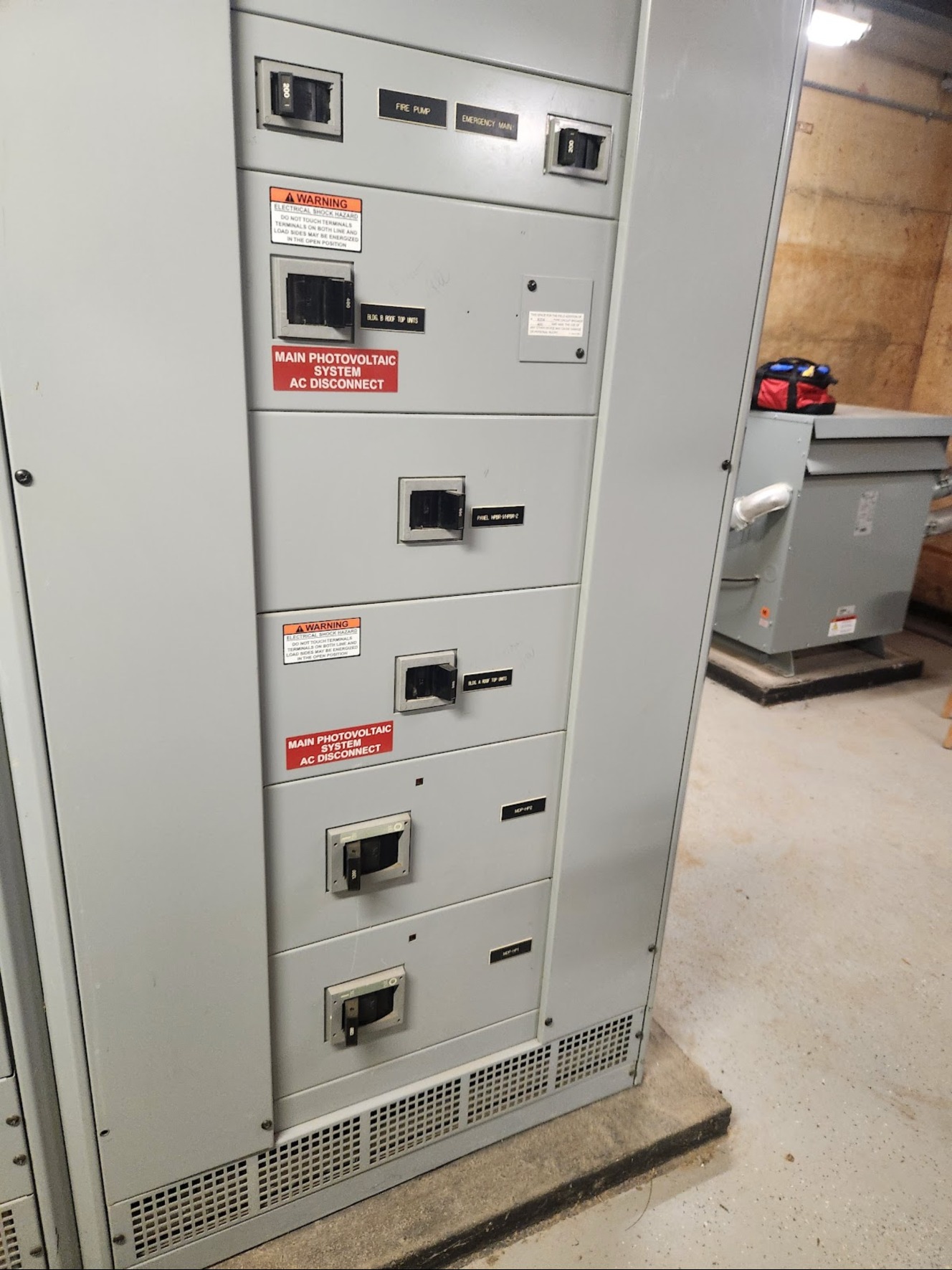
- Checking DC and AC connections and disconnects
- Inspecting conduit, wiring, and racking attachments
- Looking for shading, debris, and panel damage
- Verifying production against expected output
- Torque and condition check on rooftop junction boxes and terminations
When Production Drops
If your monitoring app shows lower output, a failed inverter, tripped breaker, or loose connection is often the cause. We troubleshoot the system and make repairs so you aren't losing generation — and the savings that come with it.
We also service systems whose original installer is no longer in business. It's a common story: the company that installed the system has folded, the monitoring app no longer logs in, and nobody will return a call. As a licensed electrical contractor we can take over the electrical side of the system — diagnosing faults, replacing inverters, and repairing wiring — regardless of who built it originally.
Weather and Wear in the DMV
Local conditions shape what we look for. Summer heat ages inverter electronics and rooftop wiring insulation; winter freeze-thaw works on conduit fittings and roof penetrations; and storms that drop branches on roofs regularly damage panels and racking in ways that only show up as slow production losses.
Rooftop work also has a safety side that matters as systems age: older racking attachments, animal damage to conductors, and degraded roof flashing near conduit penetrations are all things we check while we're up there, so a maintenance visit doubles as an early warning for roof issues.
Protect Your Investment
Regular maintenance helps your system last. Most inverter issues give warning signs before they fail completely — error codes, intermittent faults, output that dips on hot afternoons. Catching them during an annual visit is far cheaper than replacing a burned-out unit after it takes a string of panels down with it.
Call (202) 521-4835 to schedule a solar service visit.
What We Check on the Roof
The inverter and the electrical connections get most of the attention, but a rooftop visit covers the whole array environment: module condition, racking fasteners, conduit supports, and the roof penetrations the system depends on. A loose conduit strap or a degraded penetration boot is a small finding today and a roof leak next season.
We also document the array with photos at each visit. Year-over-year photos make it easy to spot physical changes — a cracked module, animal nesting under the array, or storm damage — that monitoring data alone wouldn’t explain.
Safety comes first up there: rooftop electrical work under live voltage demands training and proper equipment, which is one more reason solar service belongs with a licensed electrical contractor.
Frequently Asked Questions
How often should solar panels be serviced?
An annual inspection is a good baseline, plus a service call any time production drops unexpectedly.
Do you service systems you didn't install?
Yes. We maintain and repair systems installed by other companies.
Can you replace a failed inverter?
Yes. We diagnose inverter problems and replace units when needed.
Does maintenance include cleaning the panels?
Rain usually keeps panels reasonably clean in this region. We check for soiling, debris, and shading during the visit and flag anything that warrants cleaning.
My monitoring app stopped working — is that a maintenance issue?
Often, yes. Communication failures and monitoring outages are among the most common service calls we get. See our solar monitoring page for details.