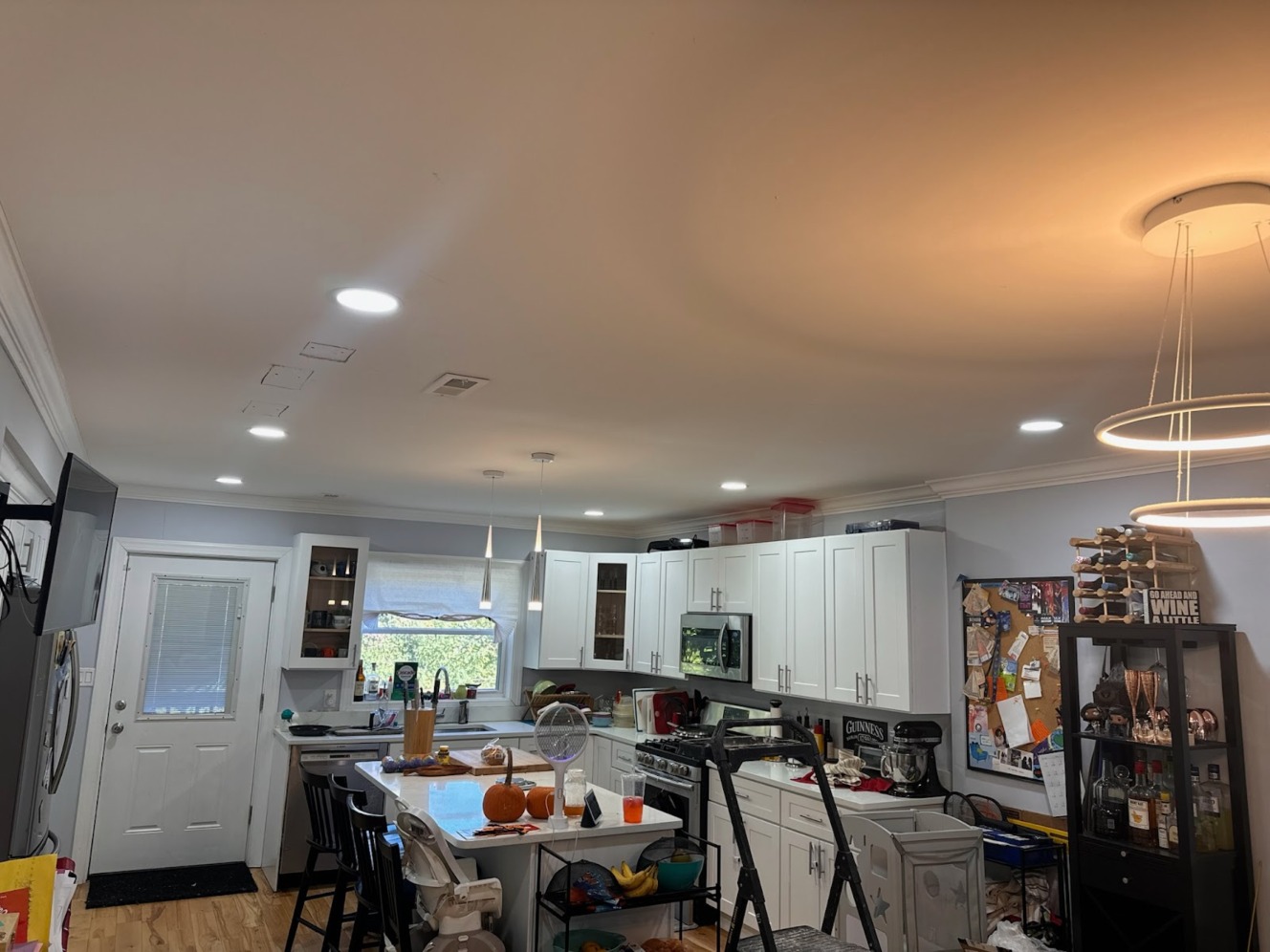
Where Recessed Lighting Works Well
We install recessed fixtures in the rooms where they do the most good:
- Kitchens, for general and task lighting over counters
- Living rooms and bedrooms, as a layered alternative to overhead fixtures
- Finished basements, where ceiling height is often limited
- Hallways and stairwells
- Bathrooms, with fixtures rated for damp locations where needed
Planning Layout and Spacing
Even lighting isn't about fitting in as many cans as possible. We plan spacing based on ceiling height, fixture beam angle, and how the room is actually used — task lighting over a kitchen counter calls for different placement than ambient lighting in a living room or bedroom. Getting this wrong is the most common reason recessed lighting disappoints homeowners: too few cans leave dark corners, too many create glare and drive up the circuit load for no real benefit.
In older homes without attic access above every room, running new wiring to each can location takes more planning before we cut anything. We route cable through finished ceilings with minimal patching, and for plaster ceilings in particular, we use techniques that limit cracking and keep drywall repair to a minimum. Where attic access is available, the work generally goes faster and with less finish repair needed afterward.
Budgeting and Phased Projects
Recessed lighting projects don't have to happen all at once. Some homeowners install a full layout in one visit; others start with the room that bothers them most — usually the kitchen or a dark basement stairwell — and add more cans in other rooms later. If you're planning to phase the work, tell us up front so we can plan circuit capacity with room for the next phase rather than maxing out a circuit on the first pass.
Fixture Types, Dimming, and Compatibility
Most installations today use LED recessed fixtures, which run cooler and last far longer than older incandescent cans. We can also pair recessed lighting with a compatible dimmer — not every dimmer works with every LED driver, and mismatches cause flickering or a minimum brightness that won't go as low as you'd like. We select fixtures and controls that are tested to work together, rather than leaving compatibility to chance after the fact.
Fixture trim style also matters for the finished look — baffle, reflector, and adjustable-gimbal trims each behave differently with the same bulb, and we'll walk through which suits the room before fixtures go in.
New Construction and Remodels
Recessed lighting is easiest to install during a renovation when ceilings are open, but it's one of the most common upgrades we do in already-finished homes too. Either way, we handle the electrical work — circuit planning, wiring, and fixture installation — and coordinate with drywall or painting as needed for a finished look.
Schedule a Layout Consultation
Call (202) 521-4835 to plan a recessed lighting layout for your space in DC, Maryland, or Northern Virginia. We'll walk through room use, ceiling access, and fixture count before any work begins so there are no surprises on installation day.
Frequently Asked Questions
How many recessed lights do I need for a room?
It depends on room size, ceiling height, and purpose. We calculate spacing on site rather than using a generic rule of thumb.
Will installing recessed lights damage my ceiling?
We minimize cutting and patching, but some drywall or plaster repair is normal for retrofit installations. We can coordinate finish repair or hand off clean cutouts for your painter.
Can recessed lights go on a dimmer?
Yes, with an LED-compatible dimmer matched to the fixture's driver. We select compatible components so dimming works smoothly without flicker.