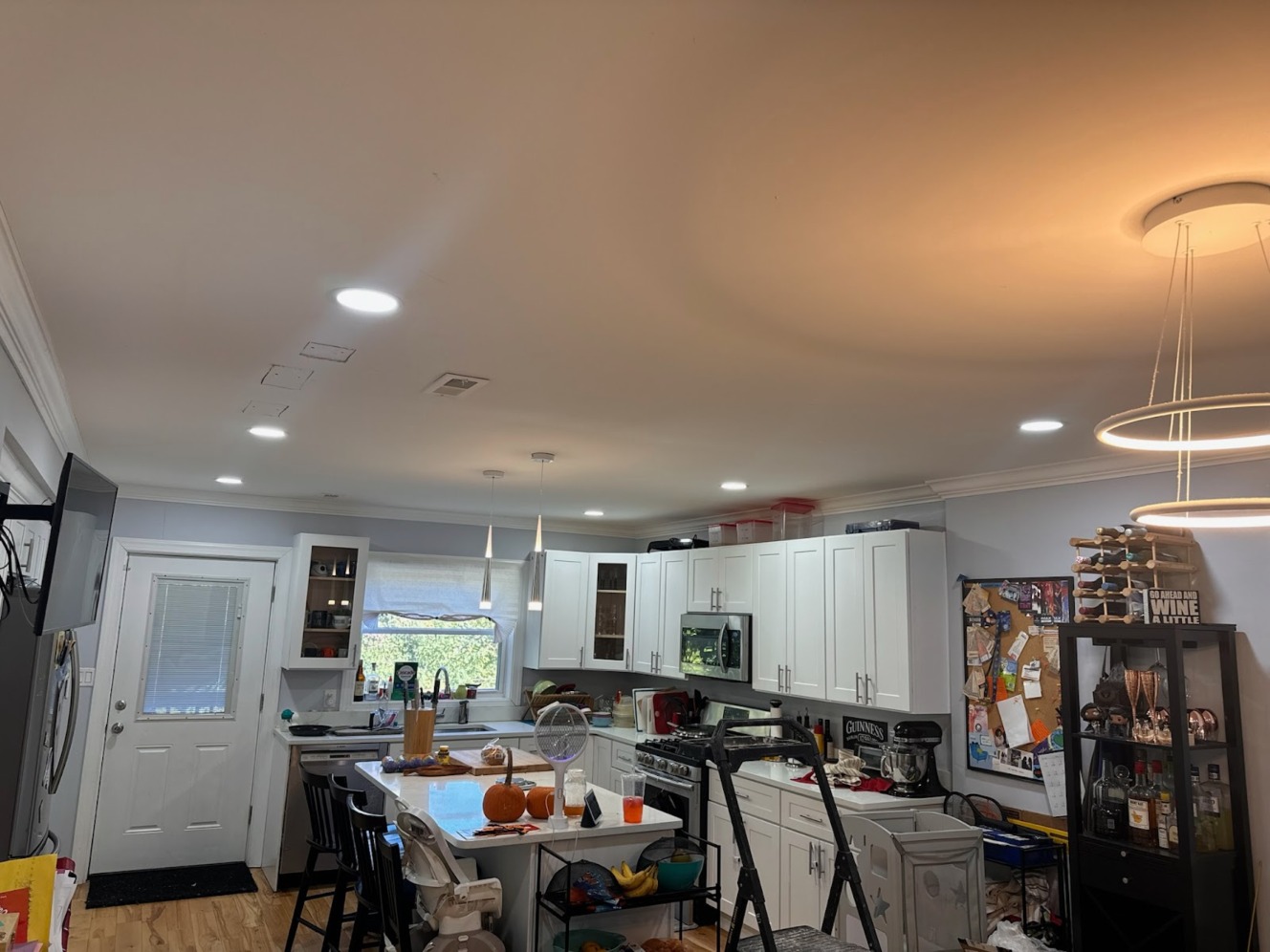
Interior Lighting: Recessed Cans, Dimmers, and Fixture Changes
Recessed lighting installation usually means cutting into an existing ceiling, which requires confirming what is above the ceiling before cutting — joist spacing, insulation type, and any existing wiring that needs to be routed around rather than through. We also check whether the fixtures being installed are rated for insulation contact, since fixtures without that rating need clearance from insulation to avoid overheating.
Dimmer compatibility is one of the most common callbacks we resolve for homeowners who installed their own dimmers or had LED bulbs retrofitted into existing fixtures. LED bulbs and fixtures do not all use the same dimming technology, and a dimmer that worked fine with incandescent bulbs can cause flickering, buzzing, or a limited dimming range with LEDs. The fix is matching the dimmer's control type to what the specific LED fixture or bulb is designed to work with, which sometimes means replacing the dimmer and sometimes means replacing the bulbs — there is no single dimmer type that works correctly with every LED product on the market.
Fixture changes, from pendant lights over an island to a ceiling fan replacing a plain fixture, usually reuse the existing circuit but need the box itself checked for weight rating. A standard light fixture box is not rated to support a ceiling fan's weight and vibration, so fan installations typically call for a fan-rated box even when the wiring itself is otherwise adequate.
- Attic or ceiling cavity checked before cutting for recessed cans to confirm joist layout and insulation type
- Dimmer control type matched to the specific LED fixture or bulb rather than assumed compatible
- Fan-rated electrical boxes used for ceiling fan installations, not standard fixture boxes
- Existing circuit load checked before adding multiple new fixtures to the same run
Outdoor and Landscape Lighting Circuits
Outdoor lighting circuits need weatherproof fixtures and connections rated for wet or damp locations, and the circuit feeding them should be protected appropriately for its location and use — the specific protection required depends on where the circuit is run and what it serves, and we confirm that against current code for each installation rather than applying a blanket rule. Landscape lighting on a low-voltage transformer is wired differently from line-voltage fixtures mounted on the house, and mixing the two systems without the right transformer sizing is a common source of dim or flickering landscape lights.
Security and motion-sensor fixtures can be considered for entry points and driveways when their coverage suits the property. Placement affects how reliably the sensor triggers, and we position fixtures based on the areas a homeowner actually wants covered rather than defaulting to a standard mounting height that may miss the intended detection zone.
Frequently Asked Questions
Can any LED bulb work with my existing dimmer switch?
Not necessarily. LED dimming compatibility depends on both the bulb or fixture's internal driver and the dimmer's control type, and mismatches can cause flickering or a limited dimming range. We check compatibility before finishing the installation.
Is a fan-rated box required for every ceiling fan?
Yes, a ceiling fan needs a box rated to support its weight and vibration. A standard fixture box is not built for that load, so we replace the box as part of the fan installation when needed.
What protection do outdoor lighting circuits need?
It depends on the specific circuit, location, and what it serves under current code, not a single blanket rule. We evaluate each outdoor circuit individually during installation.